The Beginning
The Virtual Via dei Sepolcri originally began as a small independent study at Florida State University under the advisement of Dr. Nancy de Grummond. Originally, given the rise of digital archaeology and digital humanities, I began the project wanting to develop my technological capabilities with 3D modeling and 3D printing technology. Our goal with my independent study was to experiment with the technologies and consider how they could be incorporated into educational settings, both in the classroom and museum contexts. How can we use these technologies to bring faraway places and artifacts to our fingertips, and how can such models and prints be displayed in modern museum settings?
Building the Tombs
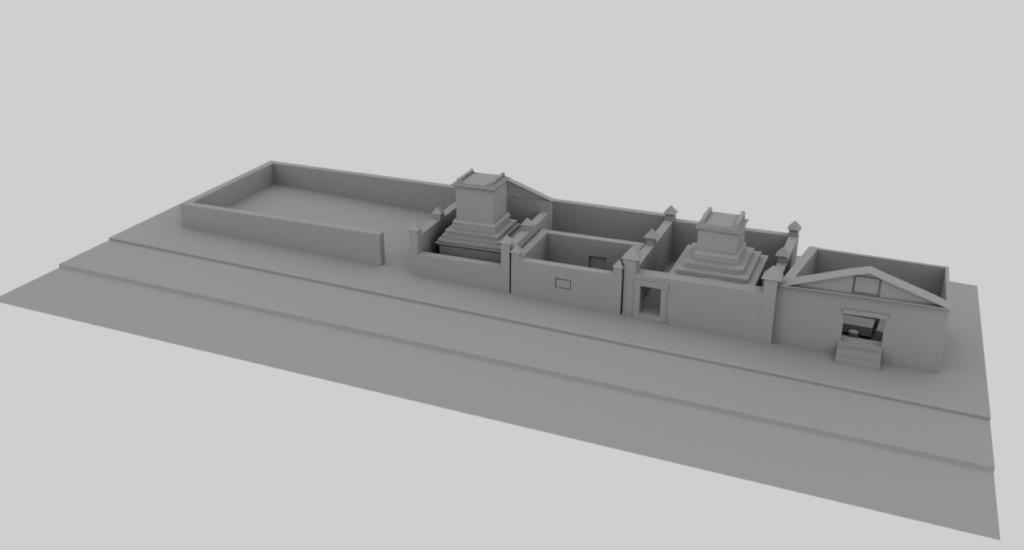
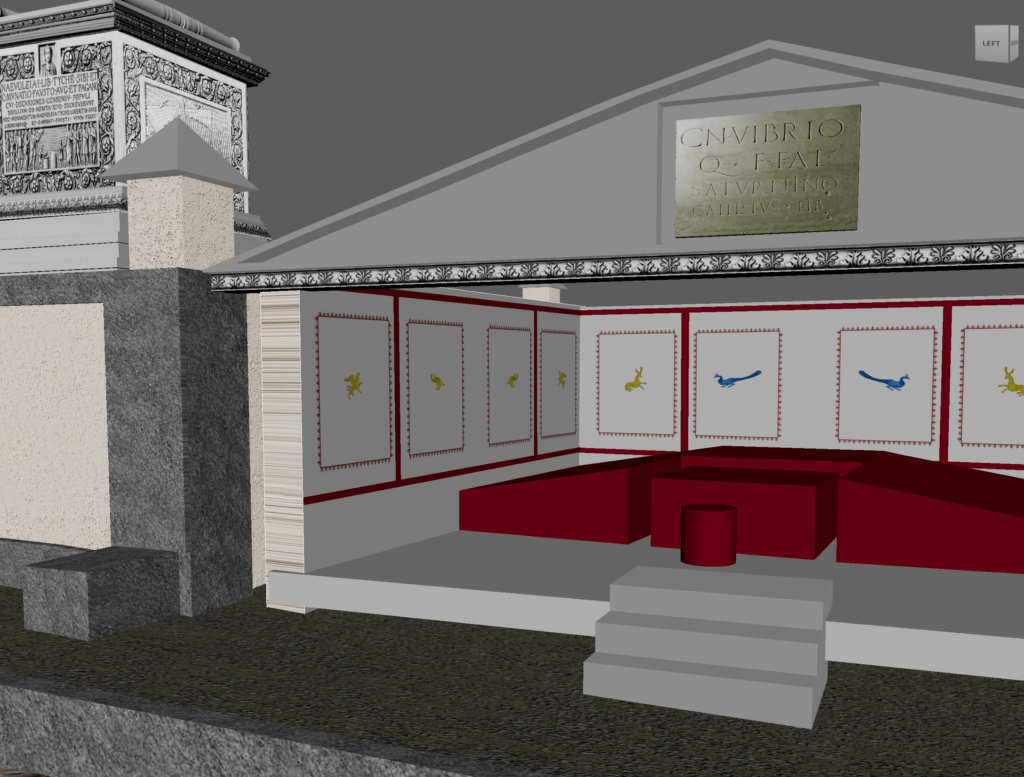
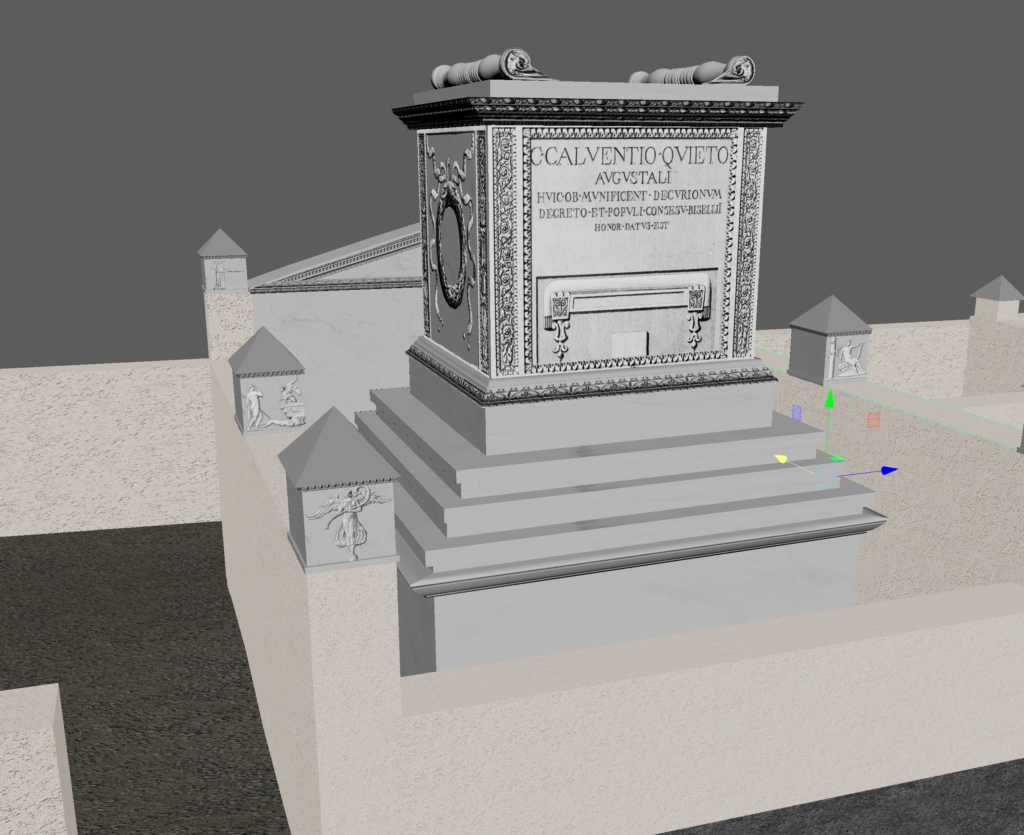
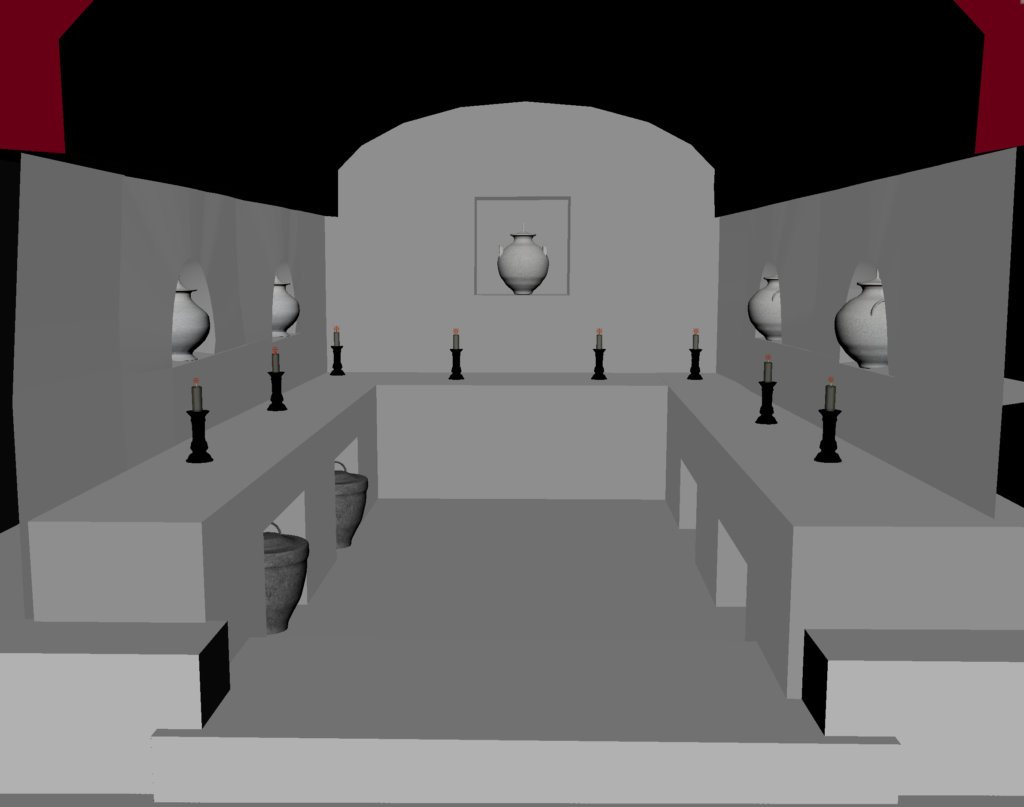
In order to build the section of the Via dei Sepolcri, this project utilized the softwares of Autodesk Maya 2023 and Adobe Photoshop. Each model was first built individually in their own Maya binary scenes before being placed into the larger streetscape. Once I had the initial gray models constructed, I used Adobe Photoshop to cut feature images, recolor them (if necessary), and create seamless textures for generic materials. Since I was working from Florida, and not physically in Pompeii, I mainly utilized various source books and internet images to create the materials and textures for the tombs.
The overall process took around four months (January – April 2023) to complete online Maya tutorials, build the four individual tombs, the entire streetscape, as well as a number of fresco decorations, reliefs, and material finds that would have been placed in the tombs.
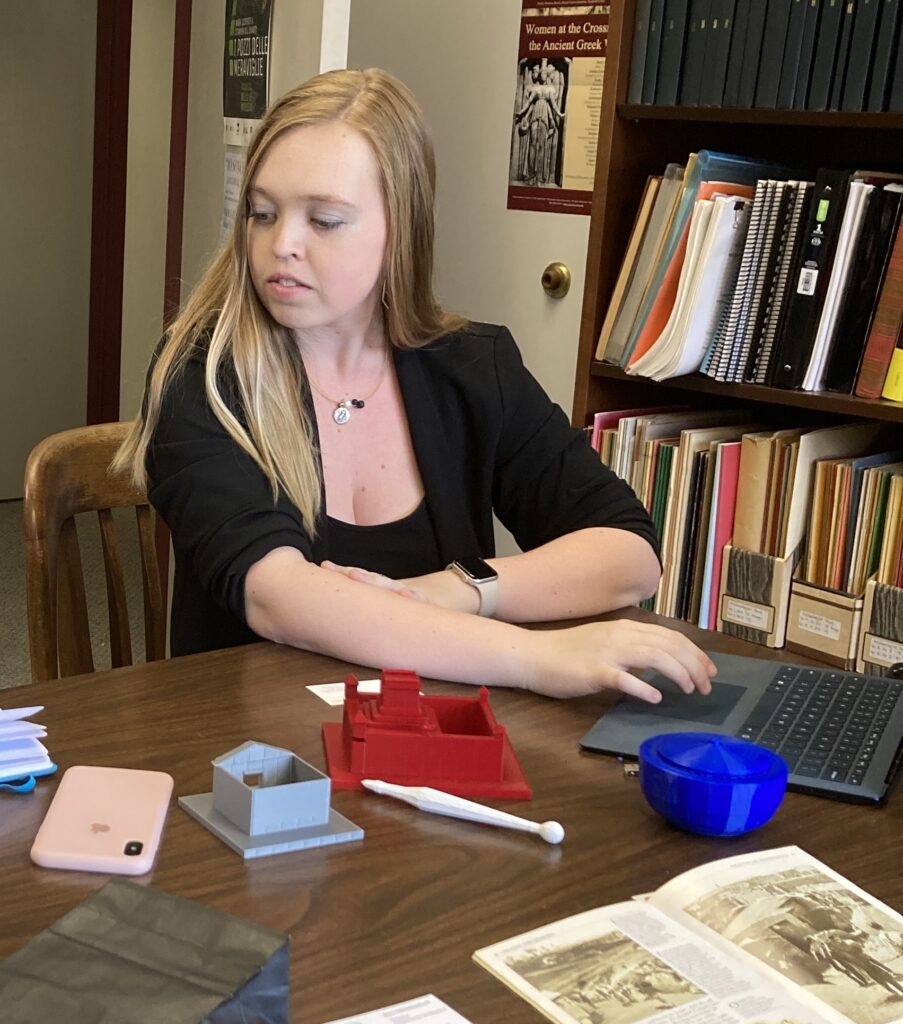
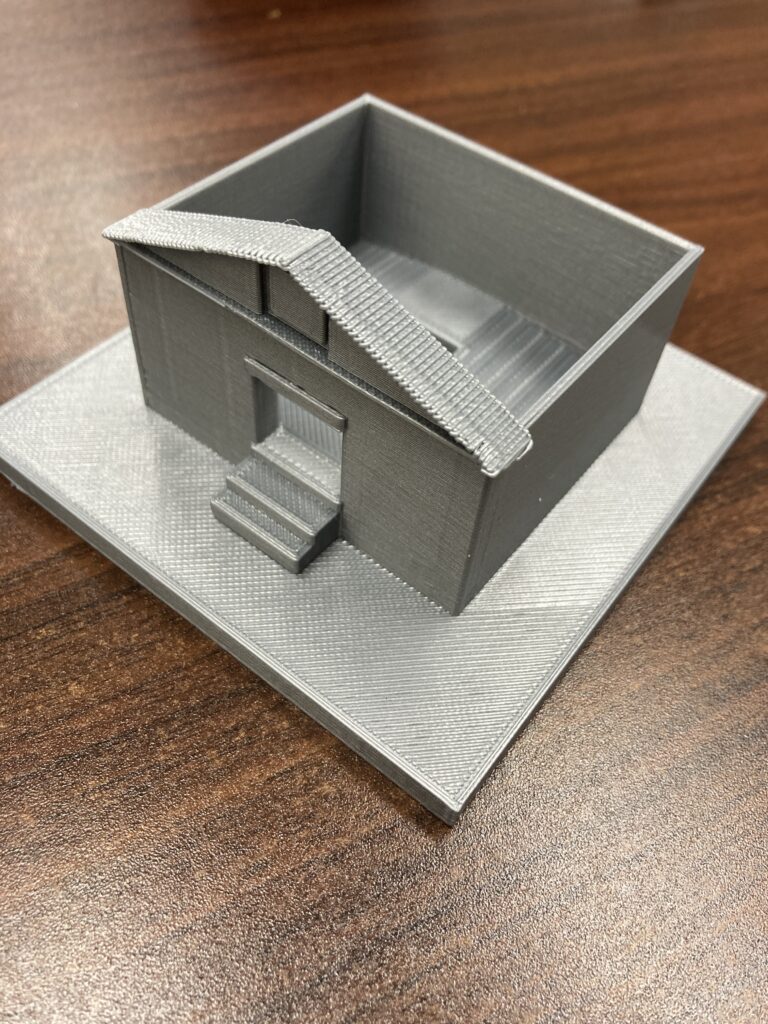
This project further investigated 3D printing the tombs and materials. Once I built the initial model of each tomb, I used the FSU Innovation Hub’s 3D printers to print the models. This added step not only let me experiment with 3D printing more generally, but also allowed me to find little mistakes within the models that I would not have seen otherwise. For example, steps that were not fully placed onto the ground layer was more visible in a smaller printed model than it was on a computer screen.
For the Future…
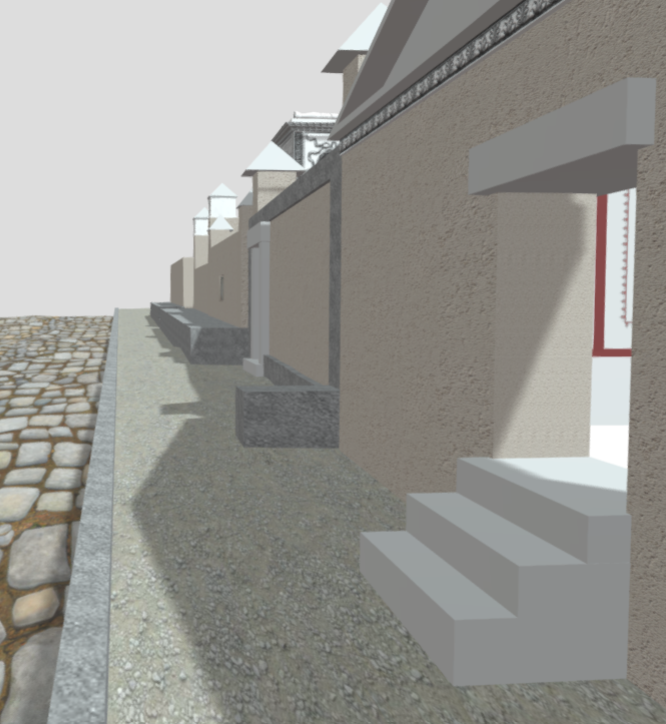
This project was relatively confined to the Spring semester of 2023. However, there is still much more that could be done with these tombs! I would first like to go back and fully finish the triclinium tomb, as the frescos are largely missing their central scenes at the moment. Furthermore, while it is fun to explore the tombs with the ability to fly around, I would like to one day expand the project to work with Unity Game Design Engine and make it so that a person could virtually walk on the street and go into the tombs as if they were really at Pompeii! Adding elements such as a background, light from the sun, and even some ambient street sounds can all dramatically enhance the experience of walking down a busy Roman highway. I hope to one day continue with this project, and allow for a more immersive experience to Pompeii and the tombs they left behind.
Acknowledgments
This project would not have been possible without the amazing help and support of Dr. Nancy de Grummond and the Innovation Hub at Florida State University. A special thanks especially goes out to Rienne Saludo, Assistant Director, Design & New Technology, for always being there to help and showing so much enthusiasm for the project!


Nina Andersen

ninaandersen0508@gmail.com
